Phone:
(701)814-6992
Physical address:
6296 Donnelly Plaza
Ratkeville, Bahamas.

Phone:
(701)814-6992
Physical address:
6296 Donnelly Plaza
Ratkeville, Bahamas.
Plan your automatic watering system with professional cost estimates for materials and labor.
Average is 1 zone per 600-800 sq ft.
Estimated Total Cost
$0
Approx. $0 per zone
Hardware
$0
Labor
$0
Permit/Fees
$0
Your feedback helps us refine our landscaping estimation accuracy.
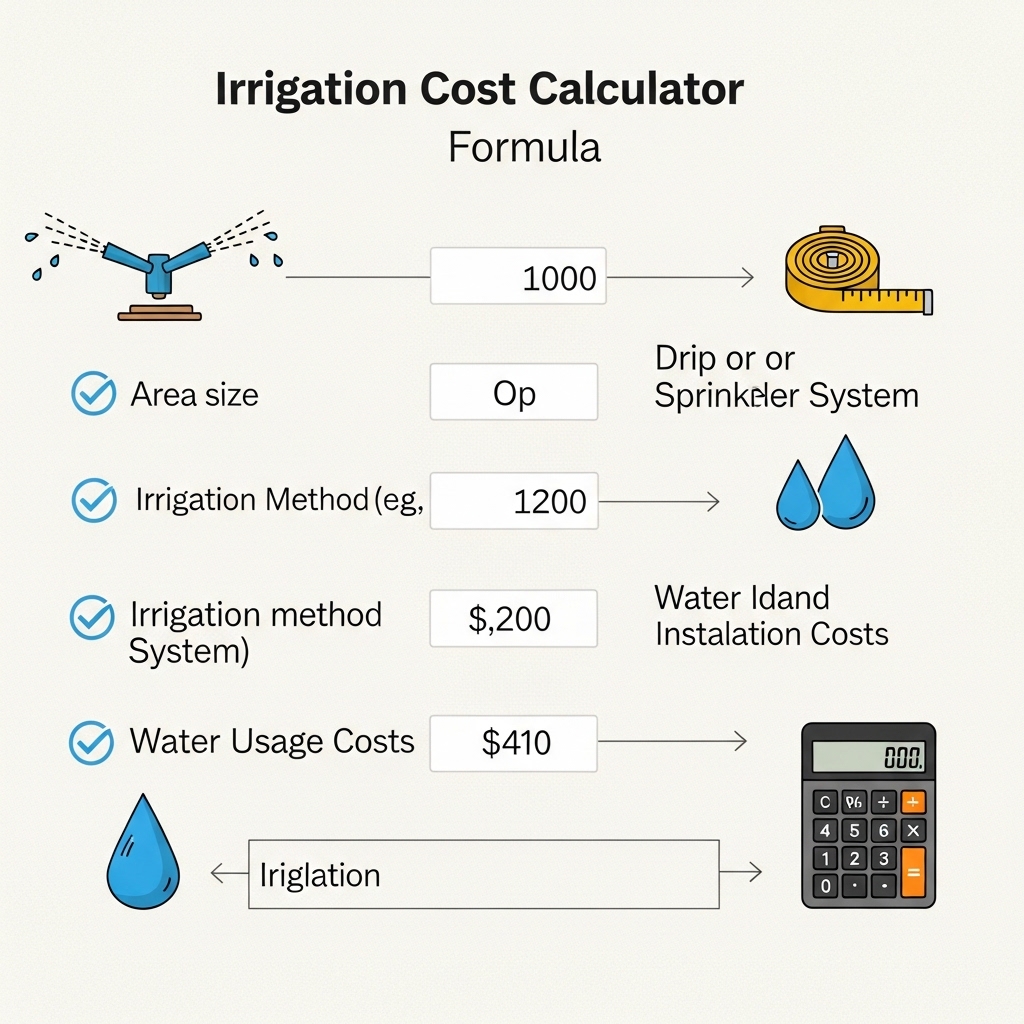
An Irrigation Cost Calculator is a specialized budgeting tool used by homeowners and landscapers to estimate the total financial investment of installing an automatic watering system. These systems are typically quoted by the number of zones required to cover the lawn and flower beds.
Costs include the main supply line, backflow prevention device, irrigation controller, solenoid valves, and the various heads (rotors, sprays, or drip lines). Our tool accounts for the differences between simple DIY hardware purchases and professional "turn-key" installations that include trenching and plumbing.
Estimate your watering system in 4 steps:
Zone-based hardware + trenching labor.
Valves and controllers typically cost $500–$1,200 depending on the number of zones.
Area size determines linear feet of PVC or poly pipe required for lateral lines.
Professional trenching and head calibration adds roughly $600–$1,000 per zone.
Our estimates use standard industry multipliers for residential properties.
While the upfront cost can be significant, an irrigation system saves thousands of gallons of water annually by delivering precise amounts at the ideal time (pre-dawn). This reduces water waste through evaporation and runoff.
Smart controllers can even adjust watering schedules based on local weather forecasts, ensuring your yard stays vibrant during droughts without violating local water restrictions.
Zoning depends on water pressure (PSI) and flow (GPM). Most residential homes have 4-6 zones. High-pressure systems can run more heads per zone, reducing the number of valves needed.
Required by law in most areas, this device prevents irrigation water (which may contain fertilizers or pesticides) from flowing back into your home's clean drinking water supply.
Sprinklers are best for large open turf areas. Drip irrigation is far more efficient for flower beds and gardens because it delivers water directly to the roots, minimizing evaporation.
Standard residential lines are buried 6-12 inches deep. Main lines (under constant pressure) are usually deeper than lateral lines (only pressurized when watering).
In freezing climates, yes. A "blow-out" using an air compressor removes all water from the pipes, preventing them from bursting during the winter months.
Homeowners with smart, EPA WaterSense certified controllers typically save 30–50% on their outdoor water bills compared to manual timers.
Caleb Richardson
Irrigation Specialist
"This tool provides a very realistic per-zone breakdown. It's accurate enough to help me quickly estimate potential projects for clients."
Melissa Vance
First-time Homeowner
"I decided to DIY the drip zones in my flower beds after seeing the labor savings here. This tool gave me the confidence to buy the parts."
Robert Vance
Property Developer
"Highly accurate tool. I used it to check a bid from a sub-contractor and it was within 5% of their itemized quote. A great gut-check."
We're always looking to improve our landscaping tools. If you have suggestions for drip or rotor cost updates, reach out.