Phone:
(701)814-6992
Physical address:
6296 Donnelly Plaza
Ratkeville, Bahamas.

Phone:
(701)814-6992
Physical address:
6296 Donnelly Plaza
Ratkeville, Bahamas.
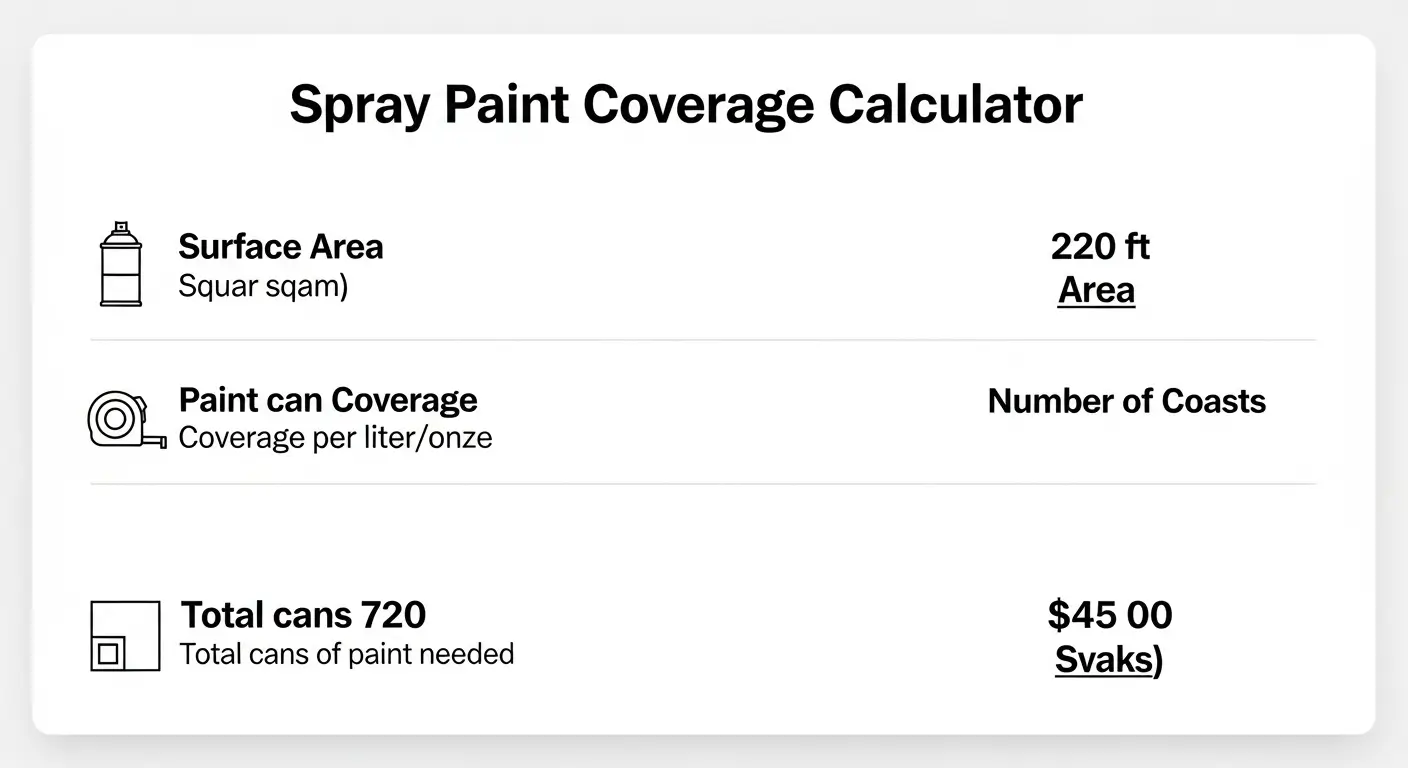
Estimate how many cans of spray paint you need for any project, big or small.
Efficiency accounts for paint lost to the air ("overspray").
Cans Needed
0
Total Estimated Cost: $0.00
Total Area
0 sq ft
Efficiency
0%
Eff. Coverage
0 sq ft/can
Total Coats
0
Your feedback helps us build better tools.
A Spray Paint Coverage Calculator helps DIYers and crafters estimate how many spray cans are needed for a project. Unlike brushing, spraying involves "transfer efficiency"—a significant amount of paint misses the target or is lost to the wind. This tool factors in surface area, object complexity, and expected waste to give you a realistic buying guide.
Simple steps for accurate results.
Get the length and width of the surface you want to paint. For 3D objects, think of the total surface area of all sides.
Is it a flat board or a wicker chair? Intricate items have lower transfer efficiency (more waste).
Input the coverage rating from your paint can (usually 10-15 sq ft) to see how many you need.
The key difference with spray paint is "Transfer Efficiency." While a can might contain enough paint for 15 sq ft, if you are painting a wire fence, 70% might miss the target.
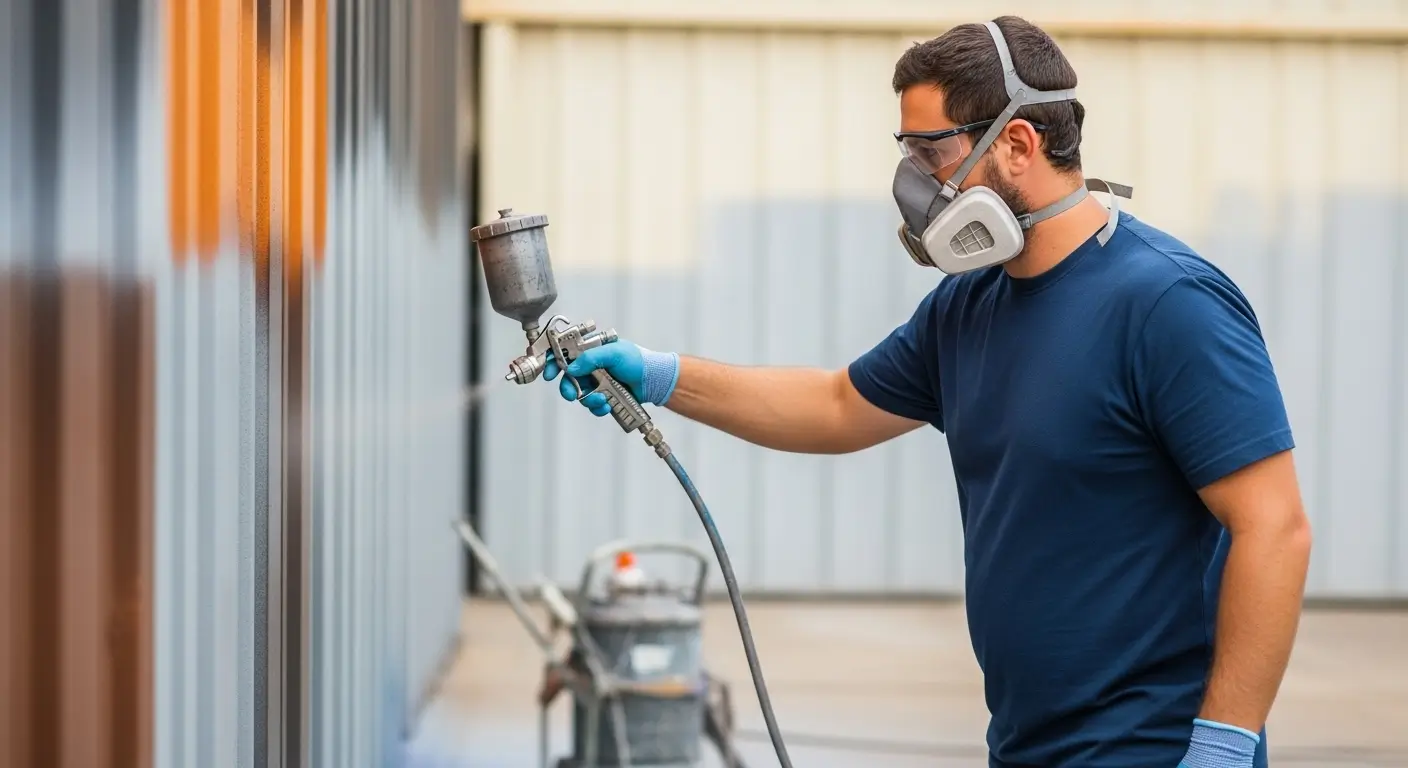
When painting a large flat wall, almost all the paint lands on the surface. However, when painting chair legs, spindles, or wicker, a significant portion of the spray cone passes right through the gaps.
Failing to account for this efficiency loss is the #1 reason people run out of paint mid-project. Our calculator reduces the effective coverage of each can based on the object type to prevent this.
If you are painting bare wood, metal, or plastic, a primer is highly recommended. Many modern spray paints are "Paint + Primer in One," which can save you a step, but for difficult surfaces, a dedicated primer is best.
Check the can! Generally, you should recoat within 1 hour OR wait 24-48 hours. Recoating during the "curing" window (often between 1 and 24 hours) can cause the paint to wrinkle.
Manufacturers estimate coverage on a perfectly flat, non-porous surface with zero wind. In the real world, wind, overspray, and porous materials (like raw wood) reduce coverage significantly.
Standard spray paint will peel off plastic. You must look for cans specifically labeled "Bonds to Plastic" or use a plastic-specific primer first.
No! Heavy coats lead to drips and runs that are hard to fix. Multiple thin coats result in a much smoother, more durable, and professional-looking finish.
On average, a standard 12oz can of spray paint covers between 15 to 20 square feet for a single coat, but effective coverage drops to 8-12 sq ft for complex shapes.
Sarah J.
Crafter
"Finally, I didn't have to run back to the store for one more can. Spot on!"
Tom R.
DIYer
"Good tool. The efficiency setting for wicker was a lifesaver."
Mike L.
Hobbyist
"Useful, but I wish I could calculate for circular objects more easily."
Emily R.
Artist
"Used this for a large mural project. Estimates were very close."
John D.
Fabricator
"Saves money. I used to buy too much just in case."
Lisa P.
Student
"The best part is knowing how many coats I can afford."
We'd love to hear from you! If you have suggestions, questions, or just want to say hello, please get in touch.