Phone:
(701)814-6992
Physical address:
6296 Donnelly Plaza
Ratkeville, Bahamas.
Phone:
(701)814-6992
Physical address:
6296 Donnelly Plaza
Ratkeville, Bahamas.
Estimate how many bass traps you need to treat low-frequency standing waves in your studio or home theater.
Select the degree of low-end control you need.
Total Bass Traps Needed
12
Est. Cost: $540
Room Vol.
0 ft³
Vertical Corners
0 ft
Target Coverage
0 ft
Traps / Corner
0
Your feedback helps us build better tools.
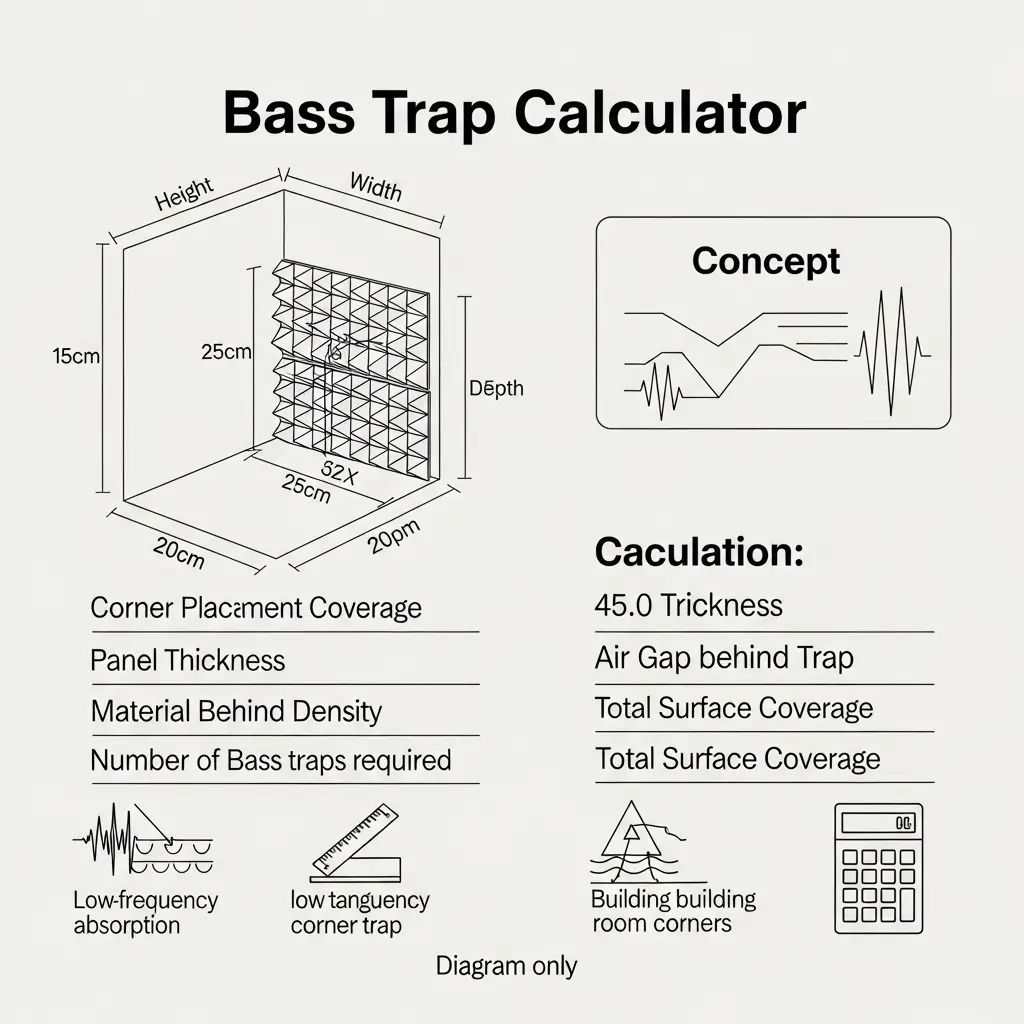
A Bass Trap Calculator is an acoustic planning tool used by audio engineers, producers, and home theater enthusiasts to determine the amount of low-frequency absorption needed in a room. Because bass waves are long and powerful, they tend to build up in the corners of rectangular rooms (creating "room modes"). This calculator estimates the linear footage of traps required to tame these low-end frequencies.
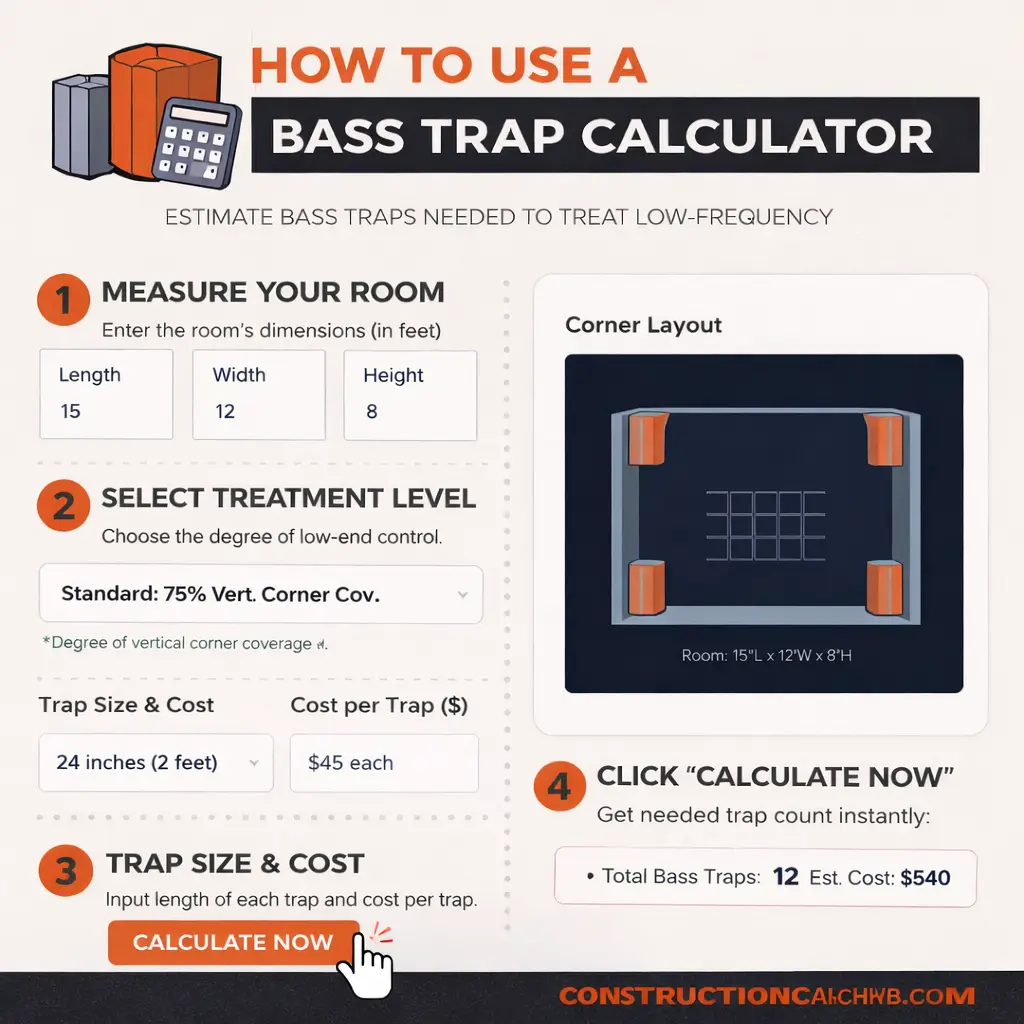
Follow these simple steps to determine your room's low-end treatment needs:
From echo to tight bass.
Input the Length, Width, and Height of your room. Total corner length is determined by the ceiling height.
Decide on the treatment level. Minimal (50%) is okay for casual listening, but Professional (100%) is required for mixing.
Choose between 2-foot or 4-foot panels to see exactly how many units you need to purchase.
Because low frequencies collect in corners (trihedral and dihedral boundaries), we base the calculation on the total available vertical corner space.
Note: If you select "Extreme," the calculator adds horizontal ceiling/wall junctures to the coverage requirement.
Standard acoustic foam panels (1" to 2" thick) do almost nothing to absorb low frequencies (under 200 Hz). If you only treat a room with thin foam, the high-end will sound dead, but the low-end will sound muddy and boomy.
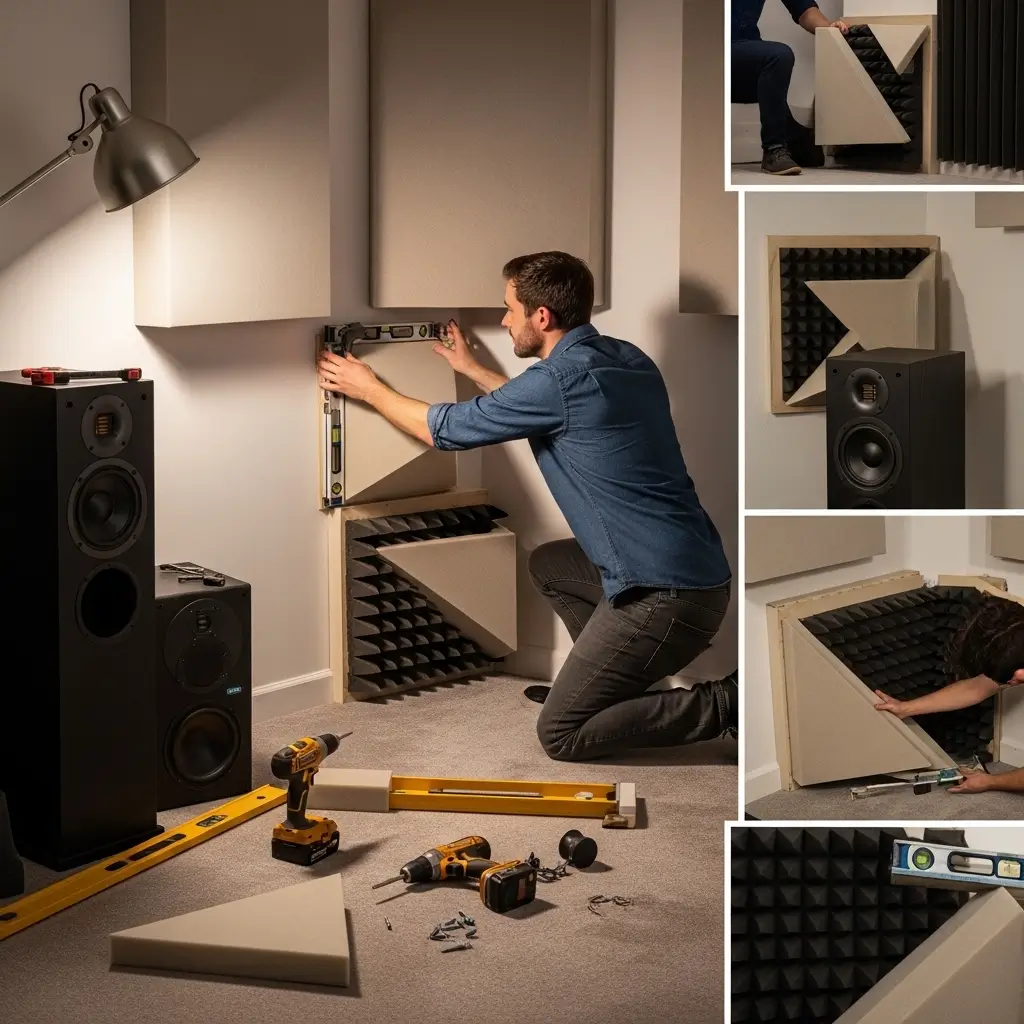
Bass traps are thicker, denser, and specifically placed across corners to catch the long waveforms of bass frequencies, resulting in a tighter, more accurate sound in your room.
A bass trap is an acoustic energy absorber designed to dampen low-frequency sound energy with the goal of reducing low-frequency resonances in rooms.
Yes! Thin acoustic foam only absorbs mid and high frequencies. Without bass traps, your room will likely have severe low-end frequency buildup, making mixes sound muddy.
The most effective place is in the corners of the room (dihedral corners). Low frequencies build up heavily in corners. Start with the corners behind your speakers.
To be effective against low frequencies, traps should be at least 4 inches thick. Corner wedge traps are often 12 to 24 inches thick at their deepest point to maximize absorption.
Absolutely. The trihedral corners (where two walls meet the ceiling) are actually the most effective spots for bass trapping because sound builds up intensely in those 3-way boundaries.
Small rooms actually suffer from worse low-frequency issues than large rooms. Even in a 10x10 room, treating all four corners floor-to-ceiling (Standard or Professional level) is highly recommended.
Rigid fiberglass (like Owens Corning 703) or mineral wool (like Rockwool Safe'n'Sound) are the industry standards. High-density acoustic foam can also work if thick enough.
Yes, straddling a corner with a flat panel creates an air gap behind it. This air gap effectively increases the trap's low-frequency absorption capabilities without needing thicker material.
Mike Davis
Music Producer
"This made my home studio setup so easy. Calculated exactly what I needed to stop the low-end rumble."
Sarah Mitchell
Audio Enthusiast
"Nice app, simple to use. Helped me figure out my home theater room."
David Robinson
Acoustician
"Solid calculator. The extreme treatment option accurately reflects what I suggest to clients."
Leo Harrison
First-time User
"Fine, but I wasn't sure if it accounts for doorways."
Emily Reynolds
YouTuber
"The visualizer is great. It clearly showed how the traps stack in the corners."
John Larson
Estimator
"Good for quick budgets. The cost feature is helpful."
We'd love to hear from you! If you have suggestions, questions, or just want to say hello, please get in touch.