Phone:
(701)814-6992
Physical address:
6296 Donnelly Plaza
Ratkeville, Bahamas.

Phone:
(701)814-6992
Physical address:
6296 Donnelly Plaza
Ratkeville, Bahamas.
Calculate the precise amounts of cement, sand, and aggregate needed for your concrete mix.
Typically between 0.45 and 0.60
Cement Bags Needed
0
Based on selected bag size
Sand Vol
0 cft
Aggregate Vol
0 cft
Water
0 Liters
Dry Volume
0 cft
Your feedback helps us build better tools.
A Cement Ratio Calculator is an essential construction tool used to determine the exact quantity of materials - cement, sand, and aggregate - required to produce a specific volume of concrete. By understanding the grade of concrete (like M15 or M20), you can ensure the structural integrity of your project while minimizing waste.
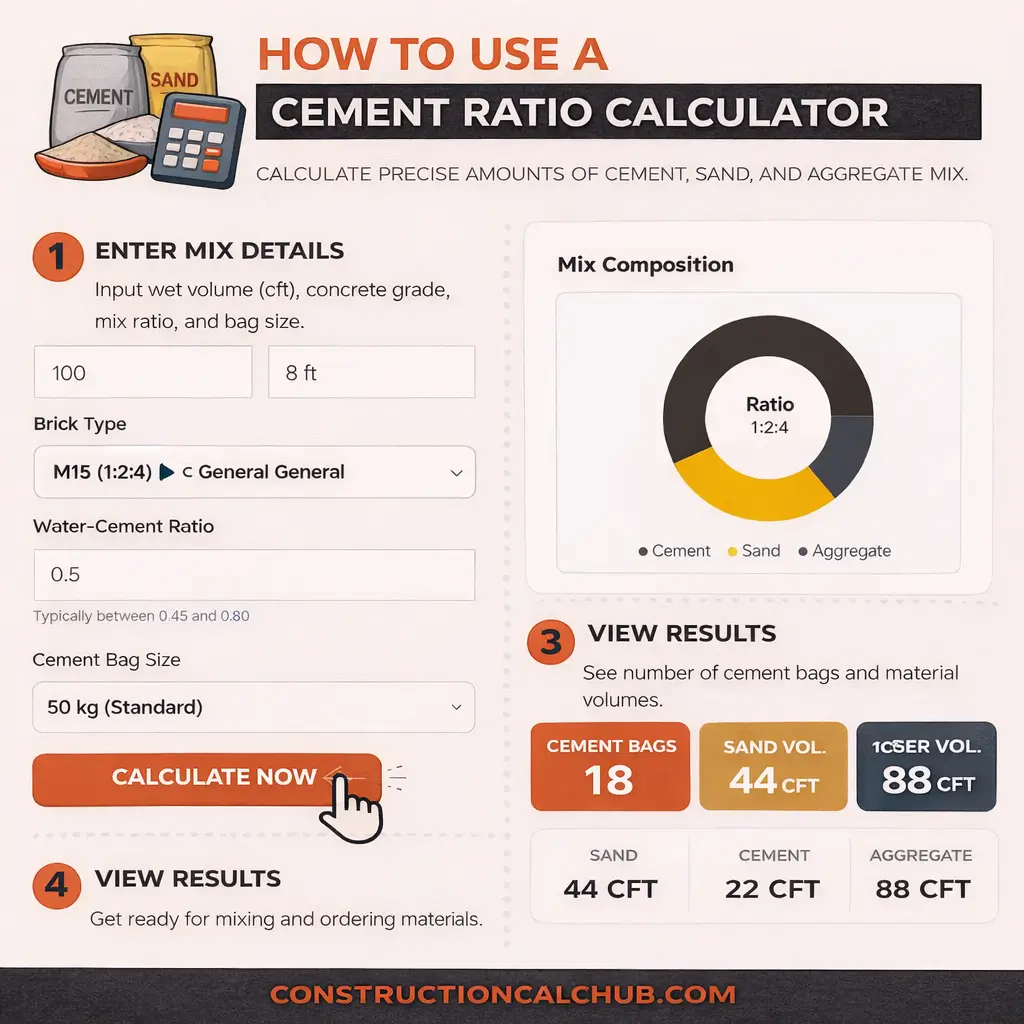
Follow these simple steps to determine your material mix:
From volume to materials.
Input the total wet volume of concrete you need in cubic feet.
Choose the mix ratio (e.g., M20 for slabs) appropriate for your construction task.
The calculator accounts for the dry volume factor (1.54) to give you accurate material quantities.
Concrete shrinks when water is added. To get 1 cubic foot of wet concrete, you need about 1.54 cubic feet of dry materials.
Knowing how to calculate water cement ratio correctly ensures the concrete cures with the intended strength and durability.
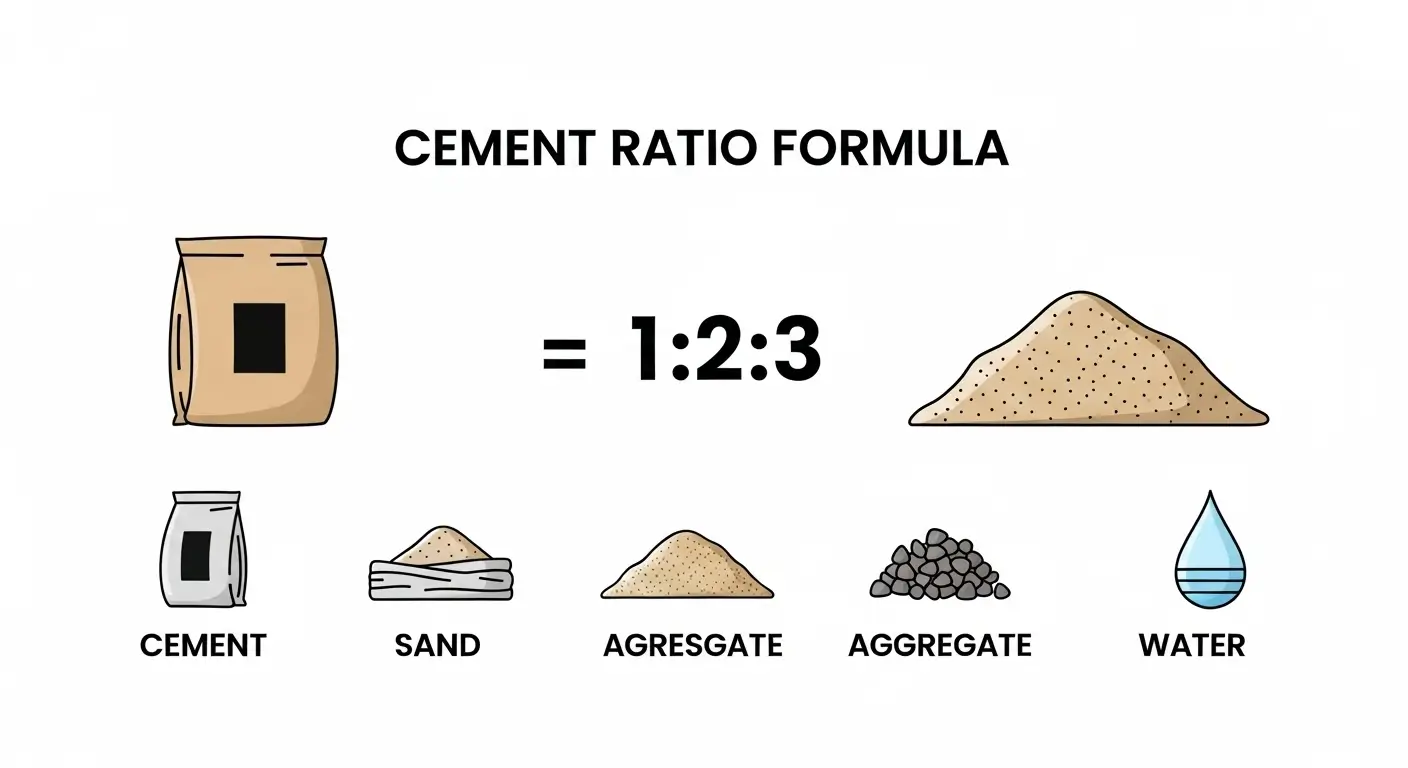
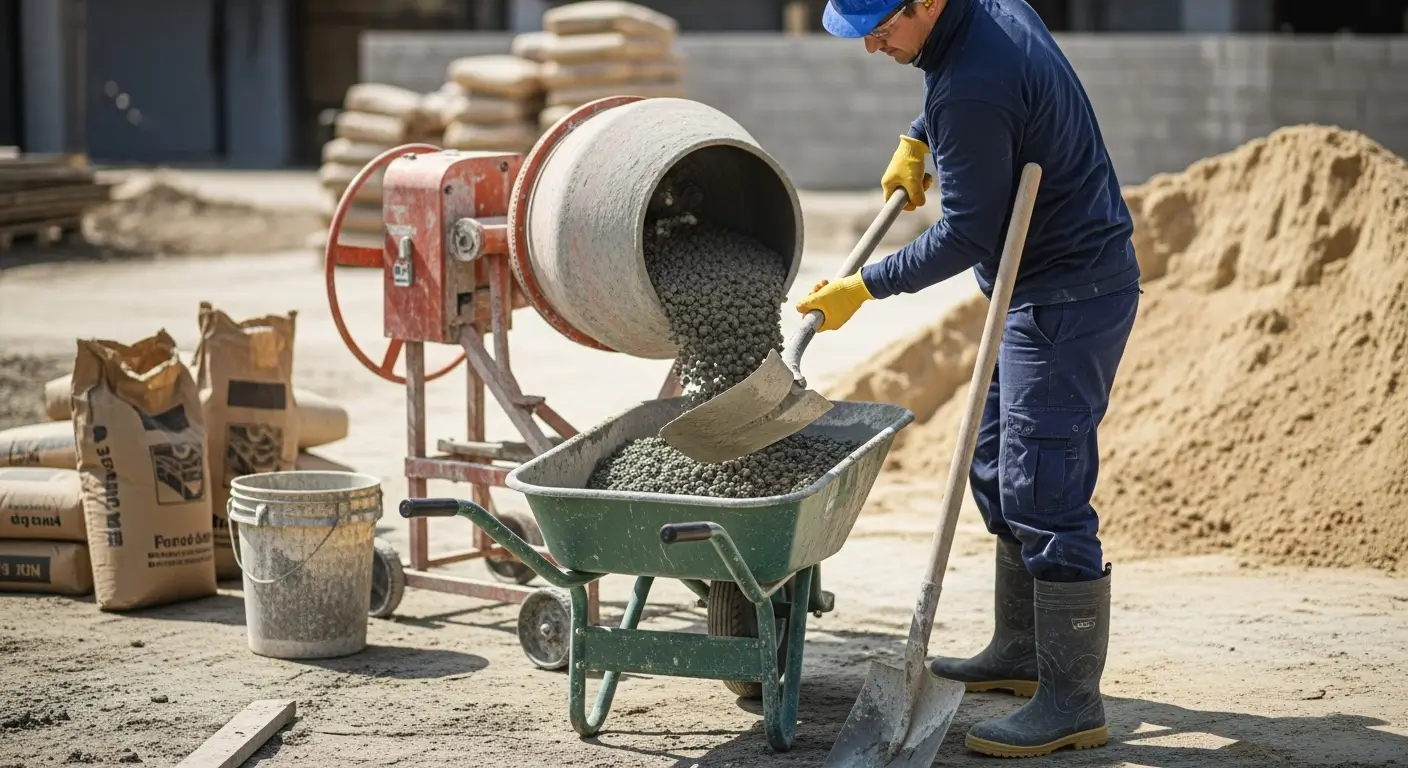
The single most important factor affecting concrete strength is the water-to-cement ratio. Too much water weakens the mix, while too little makes it unworkable.
Learning how to calculate water cement ratio gives you control over the final product quality. A ratio of 0.45 to 0.55 is typical for residential projects, providing a good balance of strength and workability.
For reinforced concrete slabs, M20 (1:1.5:3) is the standard recommendation. It offers higher compressive strength suitable for load-bearing structures compared to leaner mixes.
When you mix water with dry materials, the air voids are filled, and the volume decreases by about 54%. You must order 54% more dry material than the final wet volume required.
The number depends on the mix ratio, but for a standard M15 mix, it's roughly 6.3 bags. For M20, it increases to about 8 bags per cubic meter.
This specific tool includes aggregate, which is for concrete. Mortar uses only cement and sand (no gravel). However, the principle of dry volume increase remains similar.
Marcus Thorne
Project Manager
"This tool is fantastic. Accurately determines the bag count so we never run short on site."
Elena Rostova
DIY Renovator
"Good breakdown, really helps visual learners figure out how much sand to order for the base."
Julian Vance
Masonry Pro
"Nice app, simple to use. The water ratio adjustment is brilliant for custom climates."
Clara Higgins
Homeowner
"Fine tool, but I wasn't completely sure which grade of concrete I needed for my specific patio."
Derek Fowler
Site Foreman
"This is my go-to calculator before every large pour. Extremely accurate conversions for standard 94 lb bags."
Samantha Reed
Landscaper
"Great visualizer. Makes explaining the concrete mix logic to clients a lot easier."
We'd love to hear from you! If you have suggestions, questions, or just want to say hello, please get in touch.