Phone:
(701)814-6992
Physical address:
6296 Donnelly Plaza
Ratkeville, Bahamas.
Phone:
(701)814-6992
Physical address:
6296 Donnelly Plaza
Ratkeville, Bahamas.
Estimate exactly how many rolls you need, accounting for pattern repeats and waste.
Enter 0 for no pattern/solid.
Total Rolls Needed
0
Based on single rolls
Total Area
0 sq ft
Strips Req
0
Strips/Roll
0
Waste
Low
Your feedback helps us build better tools.
Follow this flow for accurate purchasing.
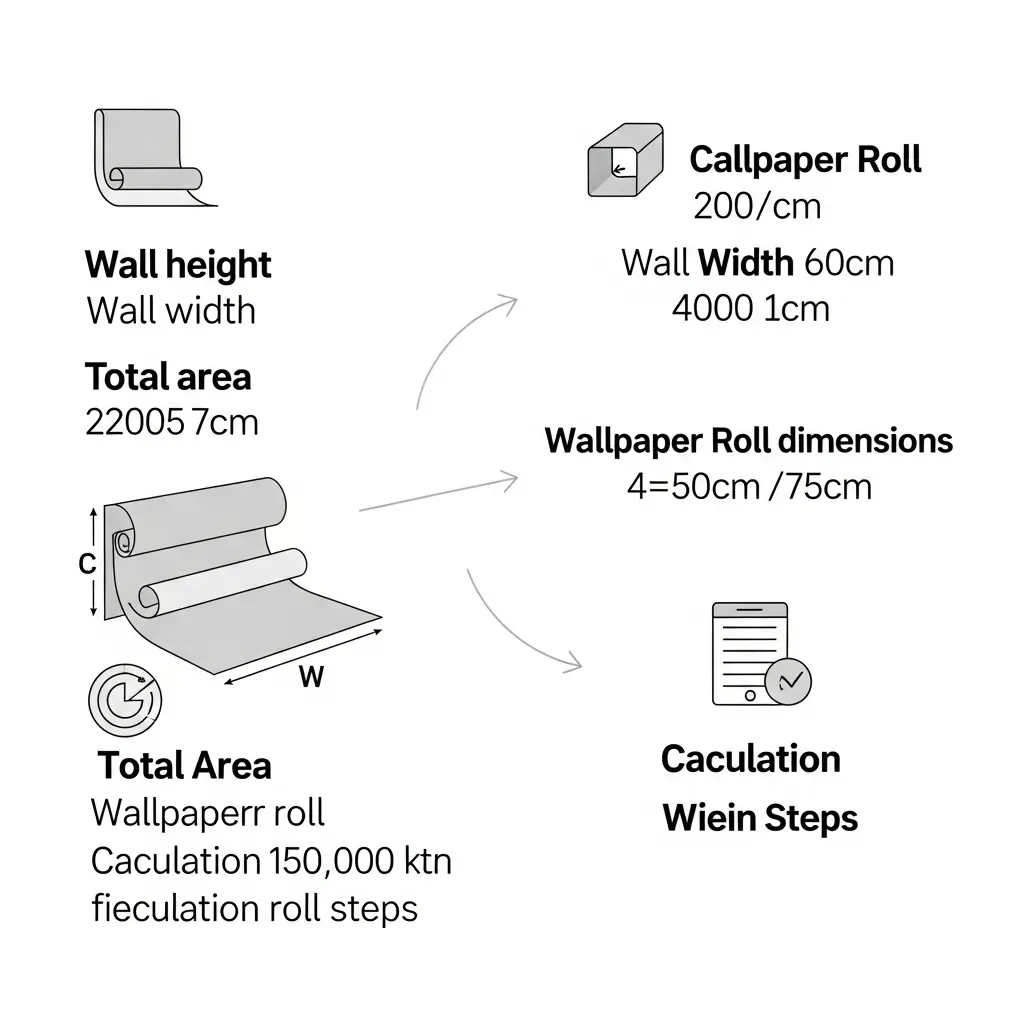
Measure the total width of all walls combined. Ignore windows and doors for now (safety buffer usually covers them).
Find the "Repeat" value on your wallpaper roll label. Large patterns create more waste because you must match designs vertically.
Determine how many full strips you can get per roll, then divide the total strips needed by that number.
We calculate rolls based on "strips" rather than just square footage to account for pattern repeats and cutting waste.
Buying too little wallpaper can be a disaster. Dye lots vary between production runs, meaning a new roll bought later might have a slightly different color shade than your original batch. On the flip side, quality wallpaper is an investment, and overbuying significantly wastes budget. Using a precise calculator helps you hit the sweet spot—enough to cover mistakes and pattern matches, without excessive leftover rolls.
The "match type" significantly affects how much paper you need:
Multiply the total width of your walls by the height of the room. Do not subtract windows or doors unless they are very large, as this provides a safety buffer. Our calculator handles this for you automatically using roll dimensions.
Wallpaper is often priced by the single roll but sold as a double roll (bolt). A single roll is typically ~25-30 sq ft, while a double roll is ~56-60 sq ft. Always check the label for total length and width.
Yes! Large patterns with a big "repeat" require you to waste paper at the top/bottom of each strip to line up the design. Our calculator asks for "Pattern Repeat" to factor this in.
We recommend 10-15% extra. This accounts for trimming waste, mistakes during installation, and future repairs. It's better to have an extra roll than to run out.
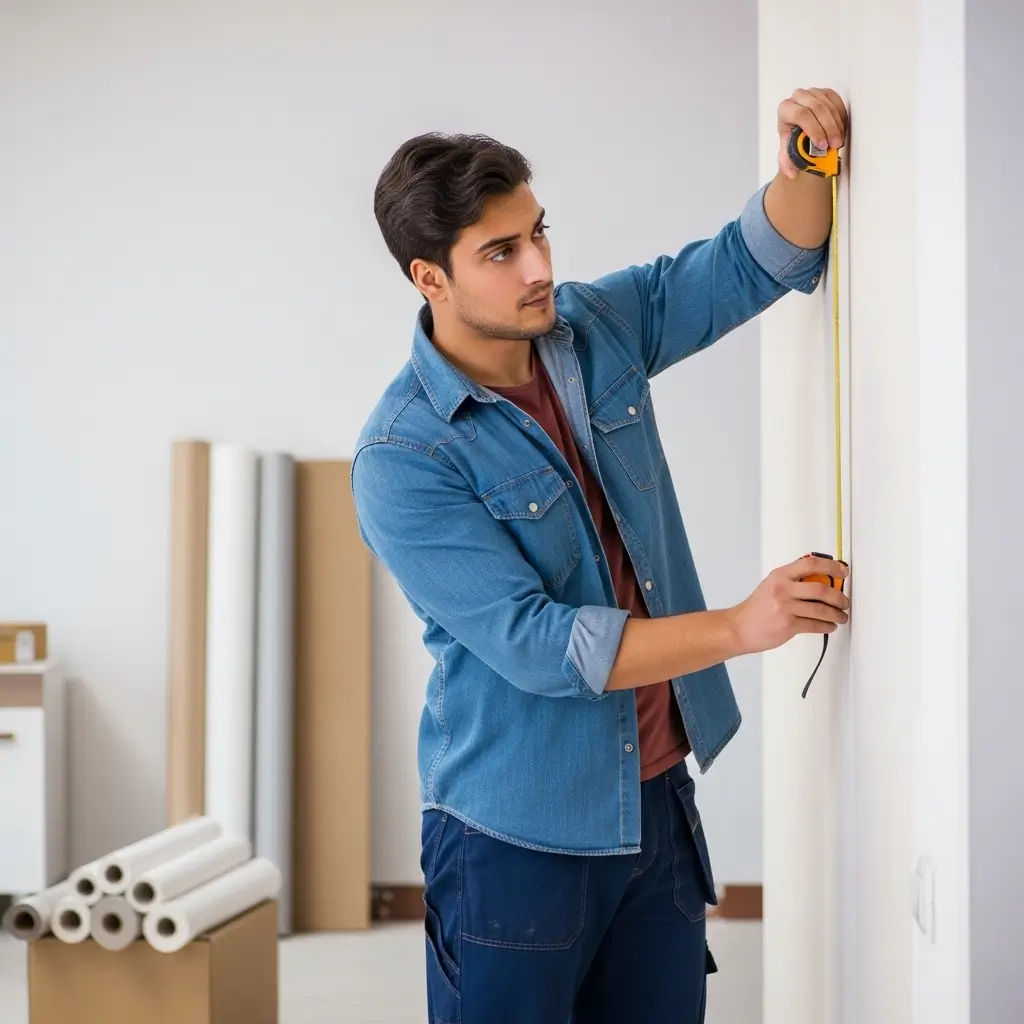
Measure the height at the tallest point of the room. Always cut your strips a few inches longer than needed so you can trim them perfectly to fit sloped floors or ceilings.
It's generally not necessary to wallpaper behind permanently fixed cabinets or wardrobes. However, you should calculate for a few inches of overlap behind the edges to ensure no wall shows through.
Heavy texture will show through most wallpaper. You may need to skim coat the wall or use a heavy-duty "lining paper" first to create a smooth surface for the final wallpaper.
A batch number (or lot number) indicates rolls produced in the same manufacturing run. Different batches can have slight color variations. Always check that all your rolls have the same batch number.
Calculate as if the windows aren't there. This gives you plenty of paper for pattern matching around the frames. You'll cut out the window areas during installation, and the offcuts can be used for smaller areas like above doors.
Many retailers accept returns of unopened rolls within a certain timeframe, but custom-printed papers are usually non-refundable. Check the store's policy before buying.
Sarah Jenkins
Interior Decorator
"Finally, a calculator that actually considers pattern repeats! Saved me from ordering one roll too few."
Mike Ross
DIY Enthusiast
"Super easy to use. I like that it calculates based on strips rather than just square footage."
Emily Chen
Home Renovator
"Was worried about the drop match pattern I picked, but this made the calculation straightforward."
David Miller
Contractor
"Great tool for quick estimates on the job site. The ability to input custom roll widths is a huge plus."
Lisa Wong
First-time DIYer
"A bit confusing at first with all the options, but once I figured out the repeat, it was accurate."
Robert Taylor
Property Manager
"Saves so much time and money. I use this for all my rental property renovations."
We'd love to hear from you! If you have suggestions, questions, or just want to say hello, please get in touch.